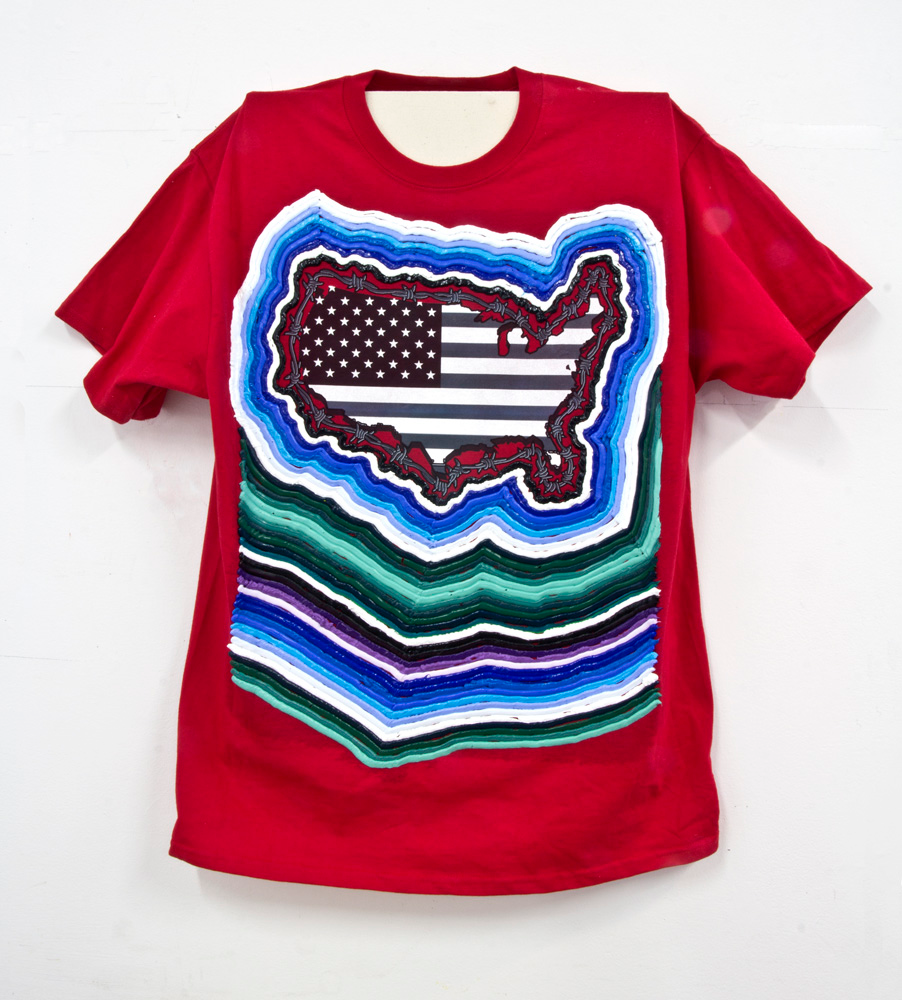
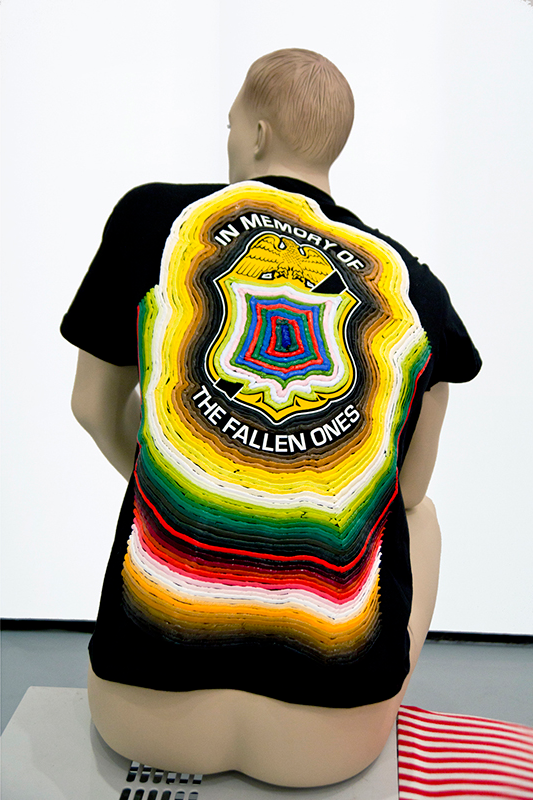
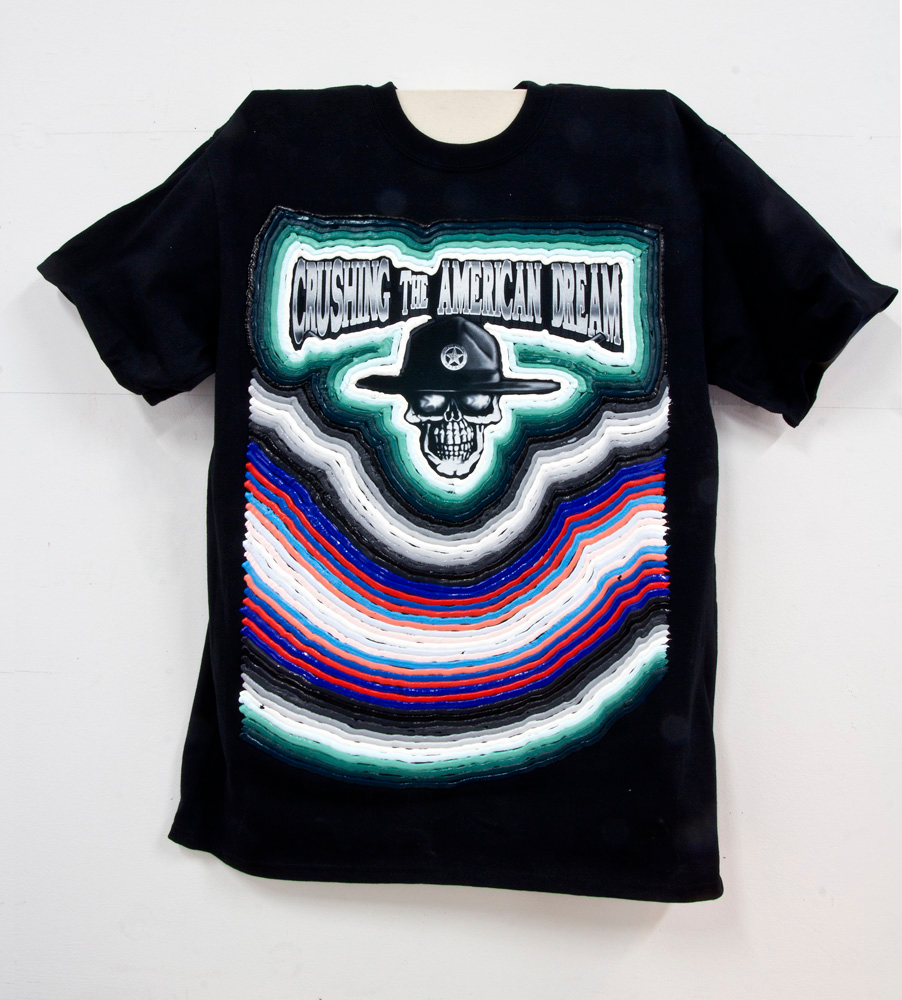
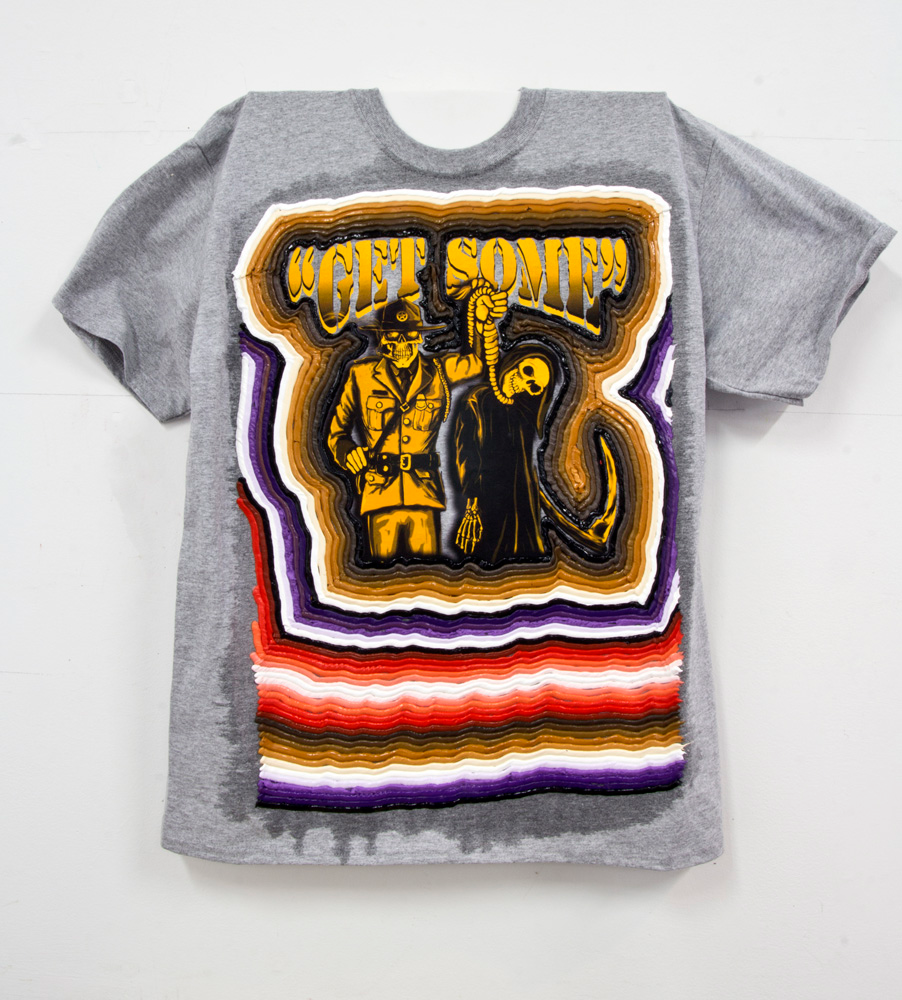
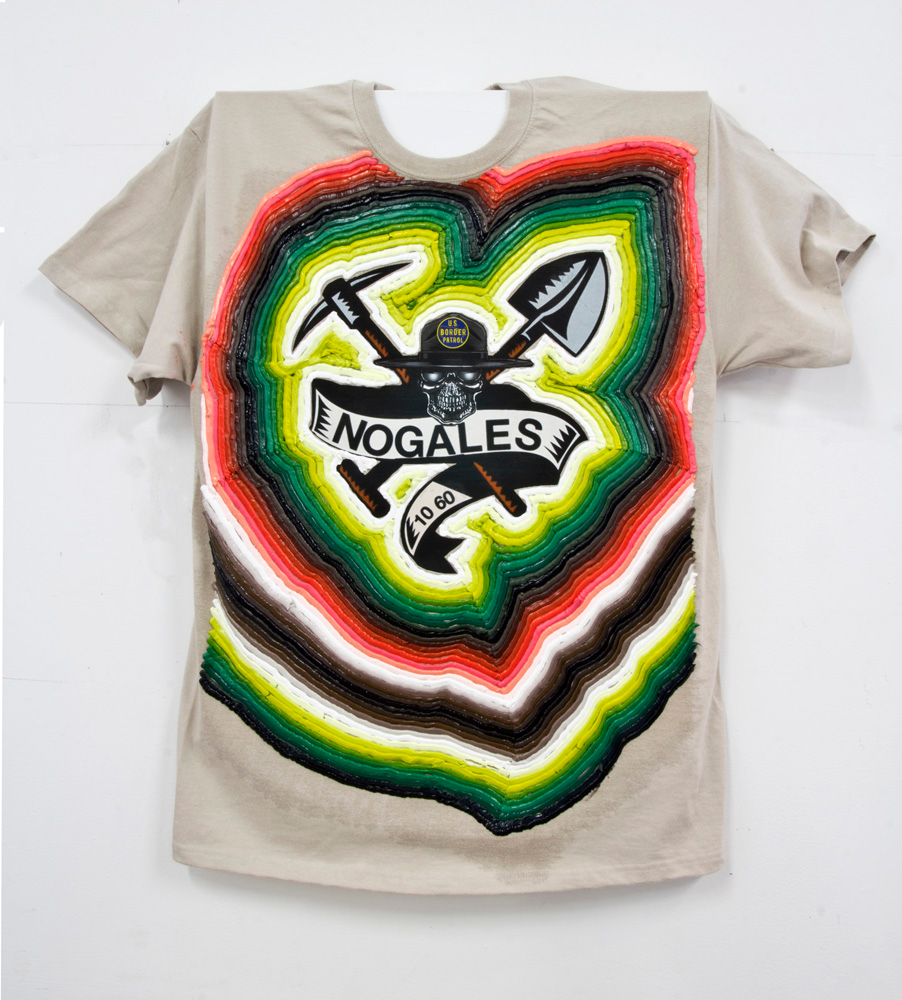
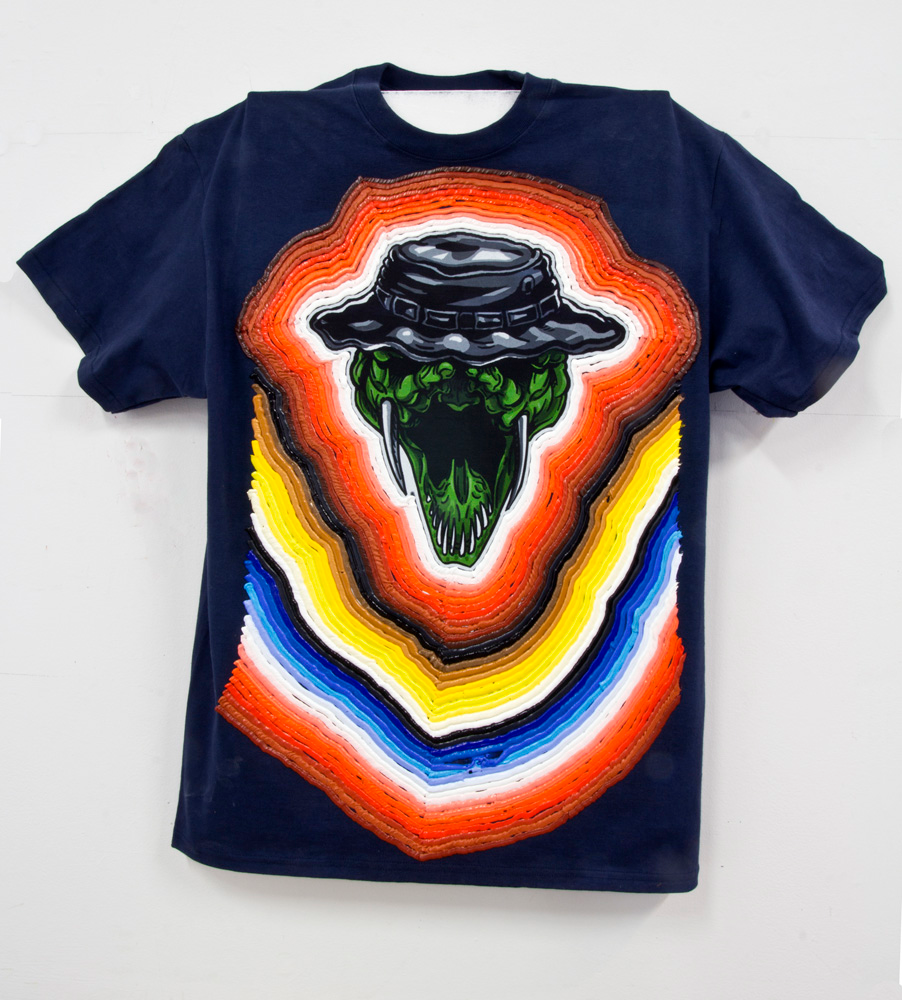
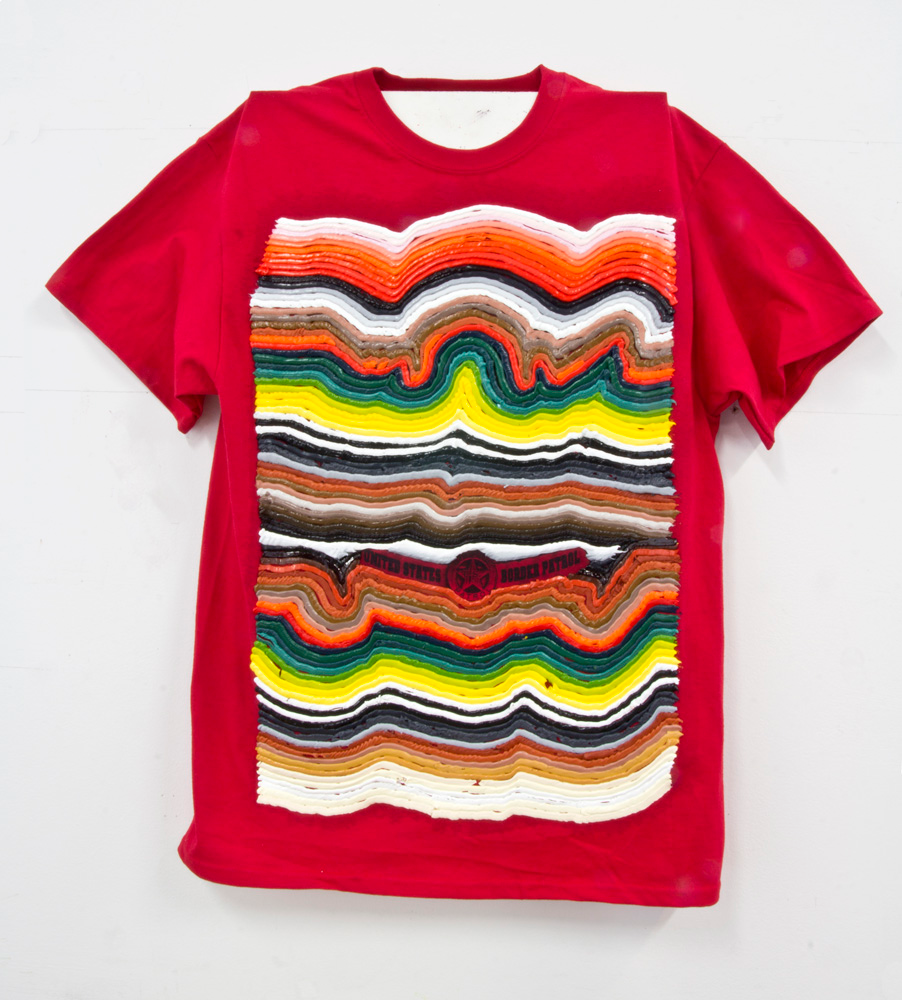
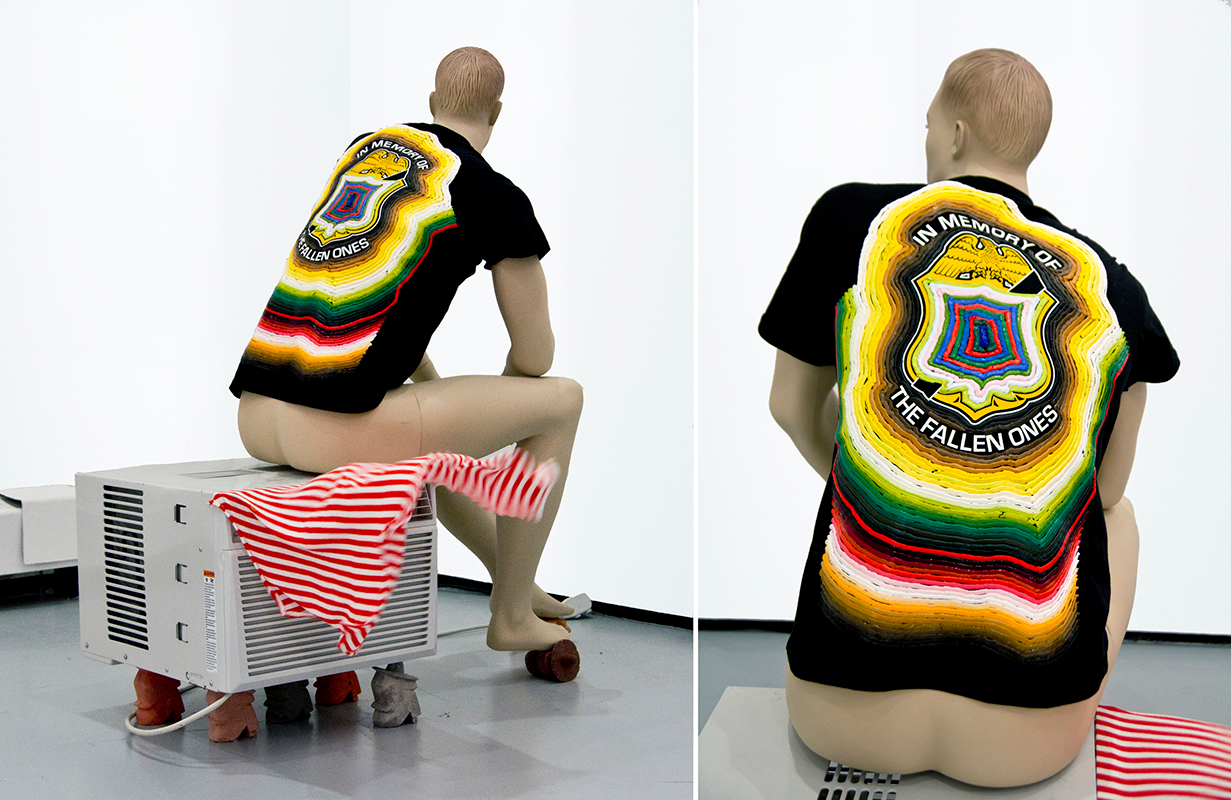
A series of hand-painted shirts examines U.S. Customs and Border Protection through its logos, patches, and insignia—symbols that project authority while often encoding racist mythologies of nationhood, belonging, and “threat.” Using these emblems as source material, the paintings crop, mirror, and destabilize eagles, shields, and flags, refusing the logos’ demand for clarity and control. The shirts are vividly colorful, drawing on the rhythm and palette of the Mexican sarape—bright bands, stripes, and saturated fields that carry cultural warmth and continuity—creating a competing iconography against institutional branding. Worn on the body, the work turns the border into an intimate, mobile surface, framing the U.S.–Mexico border space as a contested visual regime where images fight to define who is seen, who is targeted, and who is allowed to belong.